







Introduction
When a company automatically contacts a customer through a phone call, there is usually a complex communication system working behind the scenes. From appointment reminders and delivery updates to verification calls and service notifications, automated voice communication has become part of everyday digital experiences. A2P Calling is one of the technologies that makes these interactions possible by allowing applications and business systems to communicate directly with people through voice calls.
Unlike a traditional person to person conversation, an automated call begins with software, a database, or an application. The system processes information, decides when communication should take place, and sends the call through a telecommunications network. Understanding A2P Calling helps explain how modern businesses connect digital platforms with ordinary telephone networks.
What Is A2P Calling?
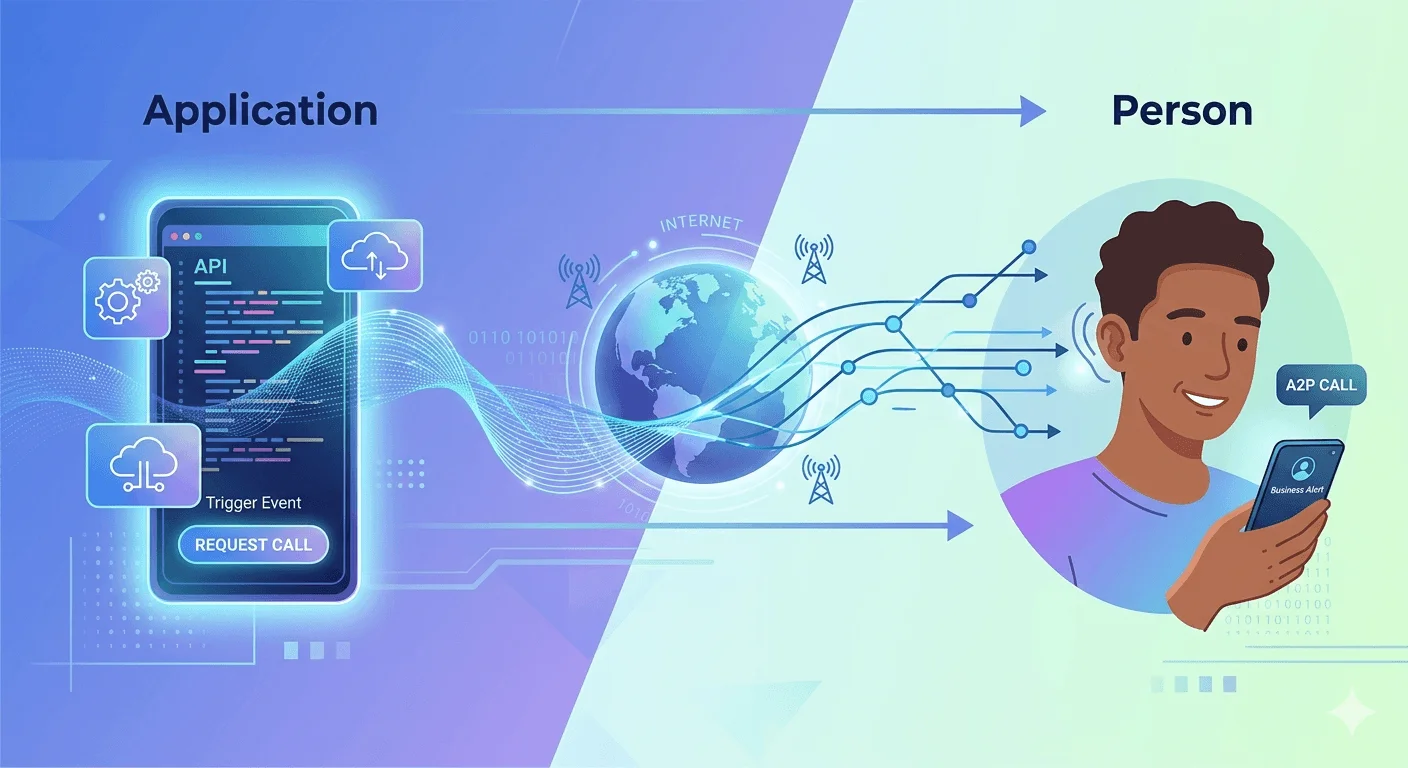
A2P Calling stands for Application to Person Calling. It describes a communication process in which an application or automated system initiates a voice call to an individual. The application may be connected to a customer relationship management system, scheduling platform, delivery system, banking application, or another digital service.
The basic idea behind A2P Calling is simple: software generates a communication request, and telecommunications infrastructure delivers that request to a recipient’s phone.
For example, a healthcare platform may automatically call a patient to remind them about an appointment. Similarly, a delivery company may use an automated system to notify a customer about a delivery status.
How A2P Calling Works
The process behind A2P Calling involves several connected components. First, an application identifies the recipient and determines why the call needs to be made. The system then sends the call request to a voice service provider or telecommunications platform.
The provider routes the request through the appropriate network. Once the recipient answers, the automated system can play a recorded message, use text to speech technology, or connect the person with another communication system.
In more advanced environments, A2P Calling can use APIs that allow software applications to communicate with voice platforms automatically. These APIs act as a bridge between the application and the telephone network.
Common Uses of A2P Calling
There are many practical applications for automated calling. Organizations can use automated voice communication for appointment reminders, service notifications, transaction alerts, emergency messages, and customer support workflows.
Another common use involves verification. Some systems use automated voice calls to provide temporary verification codes when a user cannot receive a text message.
Transportation and logistics services can also use A2P Calling to provide delivery notifications or communicate changes in schedules. These automated interactions can reduce the need for employees to manually make repetitive calls.
Technology Behind Automated Voice Calls
Several technologies work together to support A2P Calling. Voice APIs are particularly important because they allow applications to initiate and control calls through software commands.
Cloud communication infrastructure can also provide scalability. Instead of maintaining all telecommunications equipment internally, organizations can connect their applications to cloud based voice services.
Text to speech technology is another important component. It converts written information into spoken language, allowing systems to generate dynamic messages based on customer or transaction data.
Interactive voice response systems can make A2P Calling more flexible by allowing recipients to respond using keypad selections or spoken commands.
A2P Calling and Data Processing
Behind every automated communication is some form of data processing. Before an A2P Calling system initiates a call, it may retrieve information such as a phone number, appointment time, order status, or account event.
The system then uses predefined rules to determine what message should be delivered. This means A2P Calling is not simply about placing an automated phone call; it is about connecting application data with real time voice communication.
Good system design is important because incorrect data can result in calls being sent at the wrong time or containing inaccurate information.
Security and Privacy Considerations
Security is an important consideration when implementing A2P Calling. Automated systems may process personal information, so organizations need appropriate controls for protecting customer data.
Access to communication platforms should be restricted, and sensitive information should not be unnecessarily included in automated messages. Organizations also need to consider applicable telecommunications, privacy, and consent requirements in the countries where they operate.
For this reason, responsible automated calling
systems are designed with security, authentication, monitoring, and compliance considerations from the beginning.
A2P Calling vs. Traditional Calling
Traditional calling generally involves one person manually dialing another person. A2P Calling, by contrast, starts with an application or automated workflow.
This distinction becomes especially useful when an organization needs to communicate with many people or send notifications based on specific events. Automated systems can handle repetitive communication tasks while allowing employees to focus on conversations that require human judgment.
However, automation does not eliminate the need for people. Complex questions, complaints, and sensitive situations often require human assistance.
The Future of A2P Calling
As artificial intelligence, cloud communications, and voice technologies continue to develop, A2P Calling is becoming more closely connected with intelligent communication systems.
Future systems may combine natural language processing, speech recognition, automated workflows, and real time data to create more interactive voice experiences. Instead of simply playing a fixed recording, an automated system may understand a basic response and determine the next appropriate action.
At the same time, responsible use will remain important. Clear identification, appropriate consent, privacy protection, and useful communication should remain central to automated calling.
Conclusion
A2P Calling represents the connection between software applications and traditional voice communication. It allows digital systems to trigger calls based on events, data, schedules, and predefined workflows.
From reminders and notifications to verification and customer communication, the technology has many practical applications. By combining APIs, telecommunications networks, cloud infrastructure, text to speech, and automated workflows, A2P Calling creates a bridge between digital services and telephone users.
As communication technology evolves, understanding how these systems work can help organizations build more reliable, secure, and useful automated communication experiences.


